
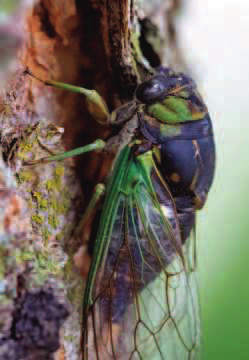
It is a distinctly summer sound, and most people find it to be pleasantly soothing. The long, loud buzzing of a cicada wafts from the tree canopy, carrying through the hot, heavy air of summer. It is the quintessential background music of the season, said Art Weber, Metroparks nature photographer.
“If you speak cicada, you may even be able to identify the species by the buzz, which is the call of a male hoping to attract a female,” he added.
If he’s successful, the female will lay eggs and, when they hatch, the nymphs will fall to the ground. They will burrow and remain underground, feeding on sap from roots. Depending on the species, some will remain underground for up to three years–though Ohio has the 17-year Cicada that remains underground for, yes, 17 years.
In the summer when they mature, the nymphs emerge encased in a prehistoric looking exoskeleton, crawl up a sturdy surface like a tree trunk, and emerge leaving the exoskeleton attached to the trunk. They will waste no time flying higher into the canopy where they will feed on sap and start advertising for a mate.
At right is an adult cicada. The photograph was captured by Weber.