
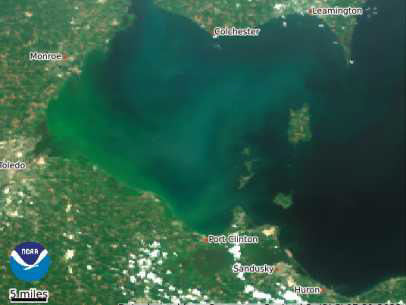
The seasonal algal blooms in western Lake Erie continued to grow in coverage and intensity over the past week. According to the Lake Erie Harmful Algal Bloom Forecast published weekly by the National Oceanic and Atmospheric Administration (NOAA), the bloom now has an area of approximately 220 square miles, an increase of about 20 miles in the past five days.
Trace levels of toxins have been detected, but levels are currently below the recreational limit and do not pose a serious risk to humans and animals. However, the harmful neurotoxin microcystin can be found in higher concentrations in areas with heavy pond scum.
If ingested or absorbed too heavily by the body, microcystin exposure can lead to liver damage, nausea, vomiting and weakness. Intense exposure can lead to acute liver failure.
Predictions from the bulletin project an intensification of scum along the shoreline from Point Place eastward, along the Maumee Bay.
It is suggested that the residents keep themselves and their pets out of areas of intense concentration, especially during calm winds when algae and water does not stir heavily and toxin concentration can intensify.
The NOAA publishes the bulletin every 24 hours to ensure the most updated information and advisory warnings. In order to view the latest updates on the lake water and its impact on the Maumee River, go to coastalscience. noaa.gov/science-areas/habs /hab-forecasts/lake-erie.