
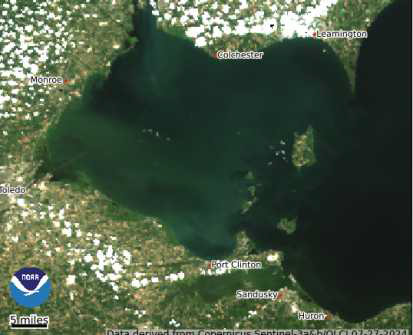
The National Oceanic and Atmospheric Administration released a bulletin on July 30, measuring the seasonal cyanobacteria bloom in western Lake Erie at an area of about 240 square miles.
The area of the bloom extends from Maumee Bay up to Stony Point, Michigan and down to the east of Magee Marsh Wildlife Area near Oak Harbor.
Sandusky Bay also has a concentrated local bloom of mixed bacteria.
Toxins in Maumee Bay have been observed over the recreational limit, making some areas, particularly those with visible scums, unsafe for swimming.
Under the right conditions, toxins from cyanobacteria can contribute to a host of problems, including vomiting, nausea, headaches, abdominal pain and even cancer.
Scientists from the NOAA, Heidelberg University and the University of Michigan projected an algal bloom severity of 5 on a scale from 1 to 10, putting it at a definitively moderate level similar to last year’s measurements.
The high humidity and wet conditions from the past week could contribute to an intensification of algae scums. Keep an eye on the water, both near shore and out on the lake, and keep yourself and your pets safe.