
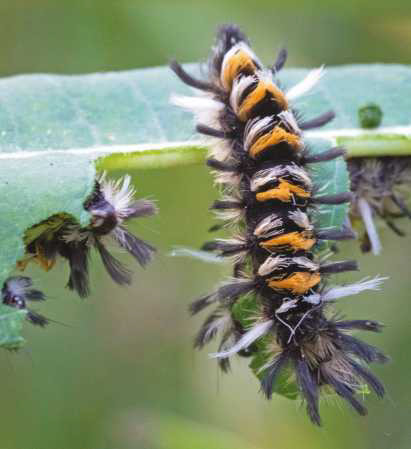
For anyone who has observed milkweed plants this year, perhaps searching for the monarch butterfly caterpillars that rely on them for food, there’s a good chance they may come across these hairy gaily colored caterpillars.
They are the larva of the milkweed tussock moth. Unlike the monarch, which is beautiful as both caterpillar and adult, the adult moth is as plain as the caterpillar is colorful.
The milkweed tussock, sometimes called the milkweed tiger moth, as a caterpillar is almost totally covered in bright tufts of orange, black and white. The distinctive colors work to signal would-be predators that’s its body is toxic, so don’t eat it. It is also said to have an amazing adaptation to emit an ultrasonic alarm that is believed to warn away bats.
“Where you find one of these caterpillars you’re likely to find several, but their feeding on milkweed is not believed to have any adverse effect on monarch populations, so stand back and enjoy them,” said Art Weber, nature photographer, who took the photo above.