
The Lucas County Engineer’s Office (LCEO) received a $44,800 grant from the H2Ohio Chloride Reduction Grant Program to help upgrade equipment and improve road salt management to protect Ohio waterways by reducing the amount of salt used by up to 30 percent.
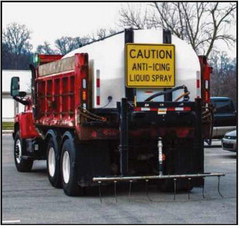
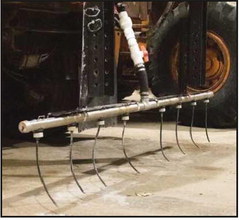
These funds will purchase a new 1,800-gallon anti-icer tank to use as a liquid brine applicator for controlling snow and ice by preventing buildup prior to a storm. With the county acquiring another brine applicator, the entire 879 lane miles currently under county jurisdiction will be able to be pretreated in 24-36 hours before a storm. This will create more favorable conditions for snow to be mechanically removed before it can create slippery conditions, and greatly reduce the use of road salts on county roads.
“Prior to this season, it took us at least two full days to pretreat our entire county roadway system before a storm,” LCEO Public Information Officer Michael Tatar said. “Now, thanks to this H2Ohio grant, we will be able to do that in just a single day.”
The Village of Holland also will see improvements under this award with the purchase of its own brine applicator. Currently, the village does not pretreat its roadways. With the new brine applicator mounted on a truck, the village will utilize this equipment to reduce the amount of road salts applied during winter storms on 12 miles of its roadways.
“We are proud to have partnered with the Village of Holland on this application and helped them to secure their own equipment so they can now pre-treat their roads,” Tatar added. “Village residents will see a significant improvement in safety and navigating their roads during and after a storm thanks to this addition.”
Governor Mike DeWine announced the creation of the H2Ohio Chloride Reduction Grant Program in December 2023, as part of ongoing work to protect Ohio’s rivers. Critical equipment eligible for grants include live-edge blades, salt spreader control systems, brine mixers and structural upgrades to salt storage facilities to prevent ground water contamination. Municipalities, townships, counties and other governmental agencies could apply for single grants of up to $75,000.