
Most symbols of autumn and Halloween have their roots in nature.
Spiders and their webs are high on that lengthy list. They are certainly standard décor of the season, adding that aura of mystery and atmosphere that enhances the feeling of dark and spooky that is associated with Halloween.
This time of year coincides with the most obvious presence of spiders and their webs. Some species deploy a strand of web into the air and follow it like a sail across the landscape. Sometimes in the early and late times of day when sunlight skims across meadows, literally thousands of strands of silk can be seen. That’s from spiders on the move, traveling on the wind, explained Art Weber, nature photographer.
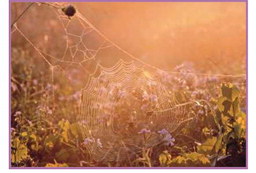
Others stay put, staking out a prime spot. Different species build webs in an amazing variety of shapes and sizes. Still others build silky tunnels where they remain in wait to ambush passing prey. The best time to appreciate the sheer number and variety is to venture along a Metropark trail early on a dewy morning. “You’ll be amazed as the sun highlights the webs; their presence betrayed by the countless jewel-like droplets hanging on the silks,” he said.
The most elegant webs are those of the orb weavers. The biggest, most beautiful webs are often the work of the garden spider, the black and yellow argiope. It’s an impressive spider that may be found in home landscapes.
The female garden spider is three times bigger than the male, with a body measuring about an inch. Both sexes have distinctive black and yellow markings. Left alone, these spiders aren’t aggressive.
“You will often see them hanging upside down in the middle of their rounded webs centered with a heavier Zshaped silk,” Mr. Weber added It is a wonderful time to enjoy the webs and wildflowers of meadows and prairies. Think of them as ravenous natural exterminators of pesky insects.