
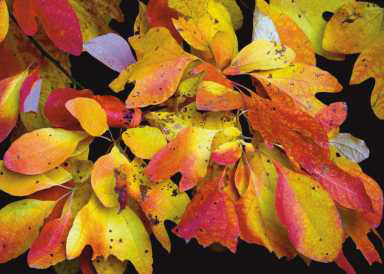
Every autumn people take guesses about how vibrant the colors will be. So far, so good. It’s looking like a very nice year for color.
Science has a good grasp on what fall color is all about, but every year it seems there are nuances that surprise. Everyone knows how colors happen, but there are so many wild cards–early hard freezes, high winds, for example– that influence exactly what the colors will look like.
One thing is certain, Jack Frost does not paint the countryside with fall colors. Frost doesn’t create it, and it doesn’t add color. In fact, color isn’t added at all.
Fall color is a product of subtraction not addition. What? Back up the truck. Deciduous trees lose their leaves as an adaptation to survive the winter. As winter approaches they shut down photosynthesis and stop producing chlorophyll. The bright green chlorophyll breaks down and is no longer visible–that’s the subtraction.
What’s left trapped in the leaf are sugars and proteins which finally have their chance to shine. “Those substances, which have been in the leaves all through the spring and summer, are responsible for the array of colors we enjoy,” explained Art Weber, Metroparks Toledo nature photographer.
Trees must eventually shed their leaves. “We’re very familiar with that part of the process. After all, rare is the person among us who hasn’t been tasked with raking them up,” he said.
Leaves fall when the tree protects itself by sealing off the connection between leaf and branch. When the seal is complete, the connection weakens, and it only takes a gentle breeze to send it fluttering to the ground.
“When they fall we enjoy them all over again, trudging through them on a woodland trail, having fun making all that crunching noise and filling the air with that distinctive aroma of fall,” Mr. Weber added.