
An injured pet can be taken to a veterinarian for treatment, but where should you go to help an injured bird, opossum, turtle or other wildlife found in the woods or even your backyard?
In northwest Ohio, that sanctuary is Nature’s Nursery, located in the Metroparks Blue Creek Conservation Area on Schaller Road in Whitehouse.
A wildlife rehabilitation and conservation education organization, the non-profit provides medical care for injured, orphaned or ailing wild animals and offers educational outreach programs for children and adults.
Nature’s Nursery was founded more than 30 years ago by Debbie Cooper, an education curator at the Toledo Zoo, who began receiving an increasing number of calls from residents asking what could be done for injured or orphaned wildlife they encountered. After obtaining the necessary permits and licensing, Ms. Cooper opened Nature’s Nursery, taking in the first animals at her home.
In that first year, 1989, she cared for 150 animals. That number has grown substantially in the years since with the center now treating more than 2,500 annually. As a result, the facility, located in what was once the warden’s home at the old prison farm, is experiencing growing pains.
During a recent tour of the facility, Allison Schroeder, executive marketing director, said space is becoming tight as the old farmhouse rooms are not large. They have a second heated structure on the property that houses more animals, including the nursery’s educational animals.
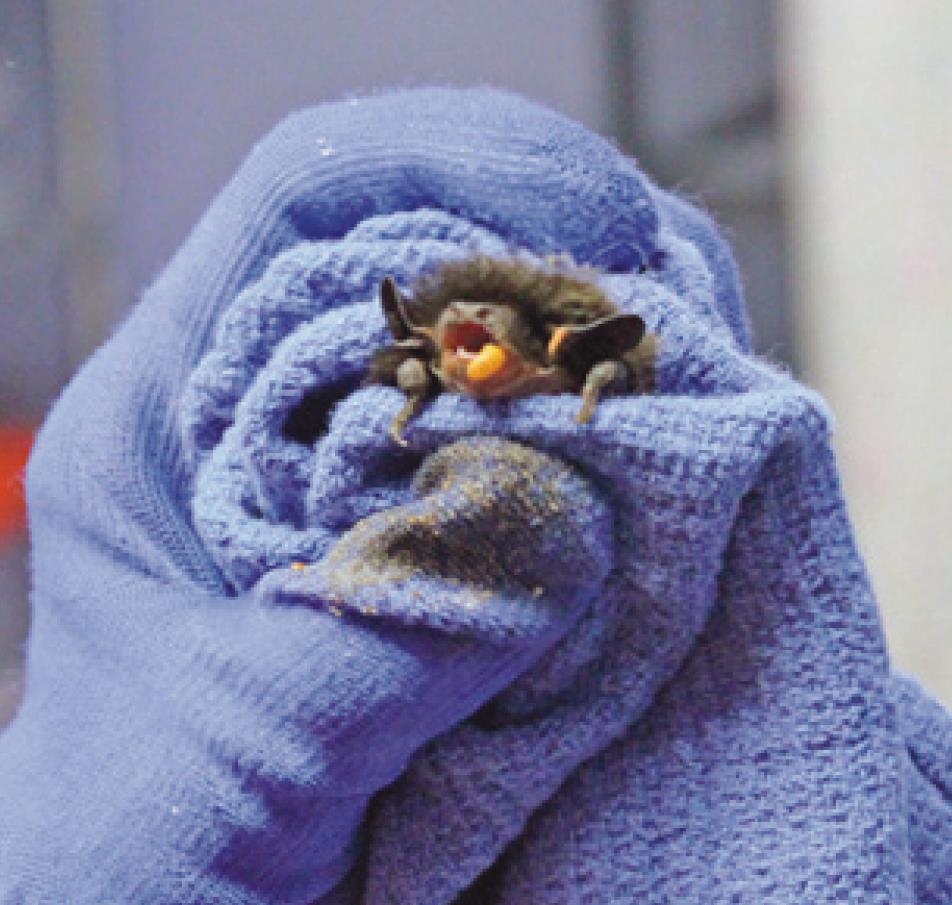
She noted that the second floor of the farmhouse houses a bat room, which is nearly at capacity with 27 bats.
“The record is 28,” said volunteer Karen Wolf, who was busy feeding meal worms to a hungry youngster.
Ms. Schroeder explained that bats are in the shelter due to warmer than normal temperatures in December which caused them to wake from hibernation prematurely. With no insects to eat, they would not survive.
Also impacting the creatures is white nose syndrome, a cold-loving fungus that grows on a bat’s skin, disturbing hibernation and resulting in dehydration and starvation. Added to that is destruction of habitat due to residential and economic growth in the region, all of which have resulted in a 70 to 80 percent reduction in the bat population.
Bats are a valuable resource to farmers and those with backyard gardens. “They eat bugs that destroy crops,” Ms. Schroeder said, adding each eats up to 1,000 bugs every night. Fewer insects equates to less spray farmers need to apply to crops and in turn, reduces pesticides in waterways.
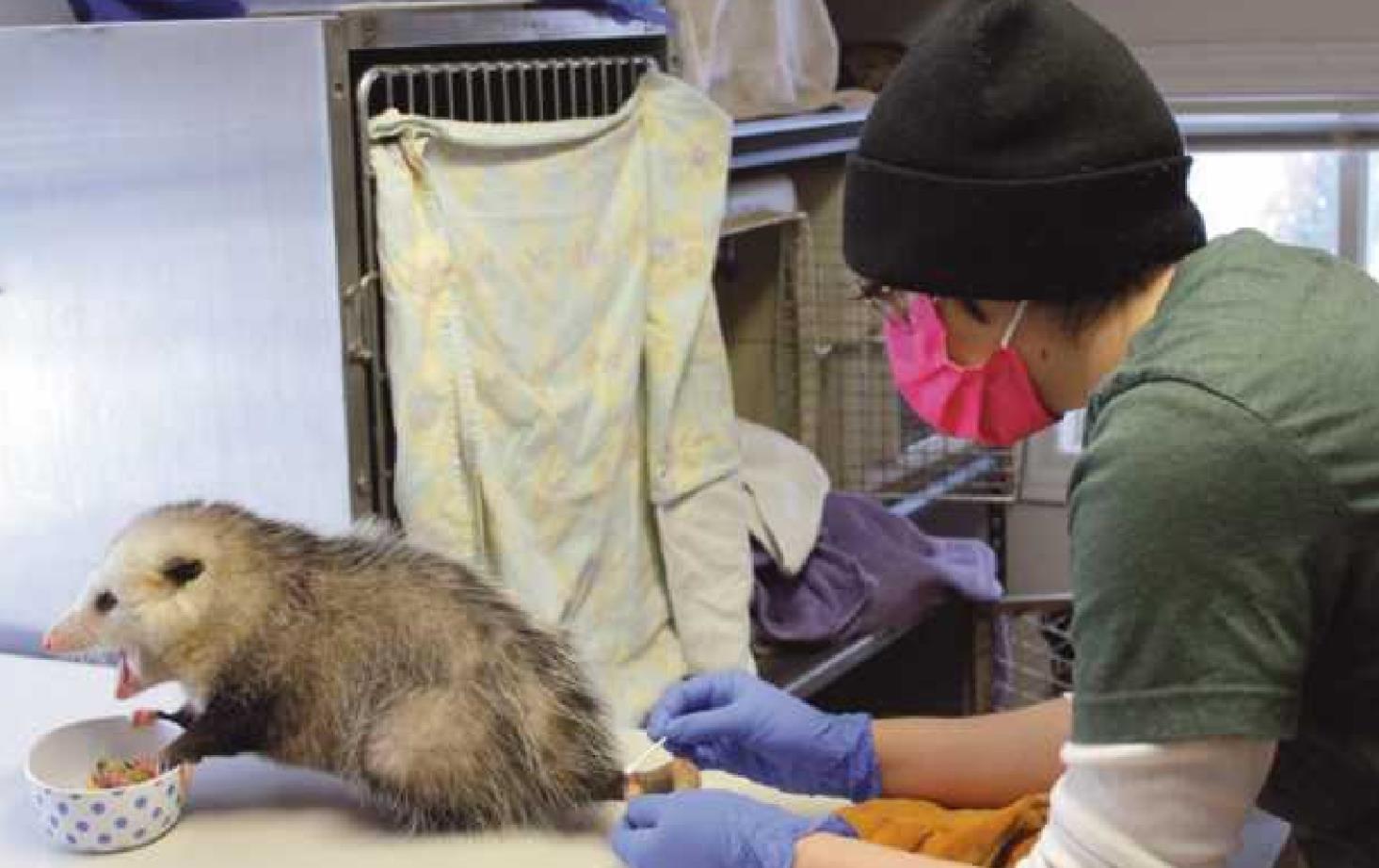
In the room next door, Cal Reynolds, animal care staff, tends to an opossum with a partially amputated tail, the result of frostbite. She carefully applies salve to the area, preoccupying the little critter with a bowl of food. “Opossums don’t like to be handled, the less the better,” she explained.
The third room in the upper level is quarantined for a number of squirrels being treated for mange, a highly contagious and serious disease. Squirrels shed large patches of their fur, and with no insulation, die from exposure, she explained.
The treatment is ivermectin, given to squirrels over a period of weeks, she said, adding, “They will be staying here for a while.”
The lower level of the home is used for office space and houses a few animals including an over-friendly blue jay.
The bird, they believe, has become so adapted to human beings that it will likely not be released back to the wild. “It’s a big problem,” Ms. Schroeder said. “There’s too much human interaction. We try to release most, but some we’ve adopted.”
When they come across a bird or other animal that has become too tame, the center keeps them for educational purposes, and if they are unable to house the animal, attempt to find another nature center.
To remove an animal from the wild, the nursery must meet criteria set up by the Ohio Department of Natural Resources that is specific to that species. They also need to obtain a non-commercial propagation license, which allows the center to permanently possess the wildlife.
The center has a number of these animals used for educational purposes housed next door to the farmhouse. From Carl, a salmon-colored albino cardinal, to Oatis the groundhog, the building is filled with beautiful and, at times, entertaining critters.
Upon entering the room, Mary Lou, an American crow, greets visitors with a loud and continuous squawk, while Martin the Mallard duck wanders the room, occasionally pecking at visitors’ feet for attention.
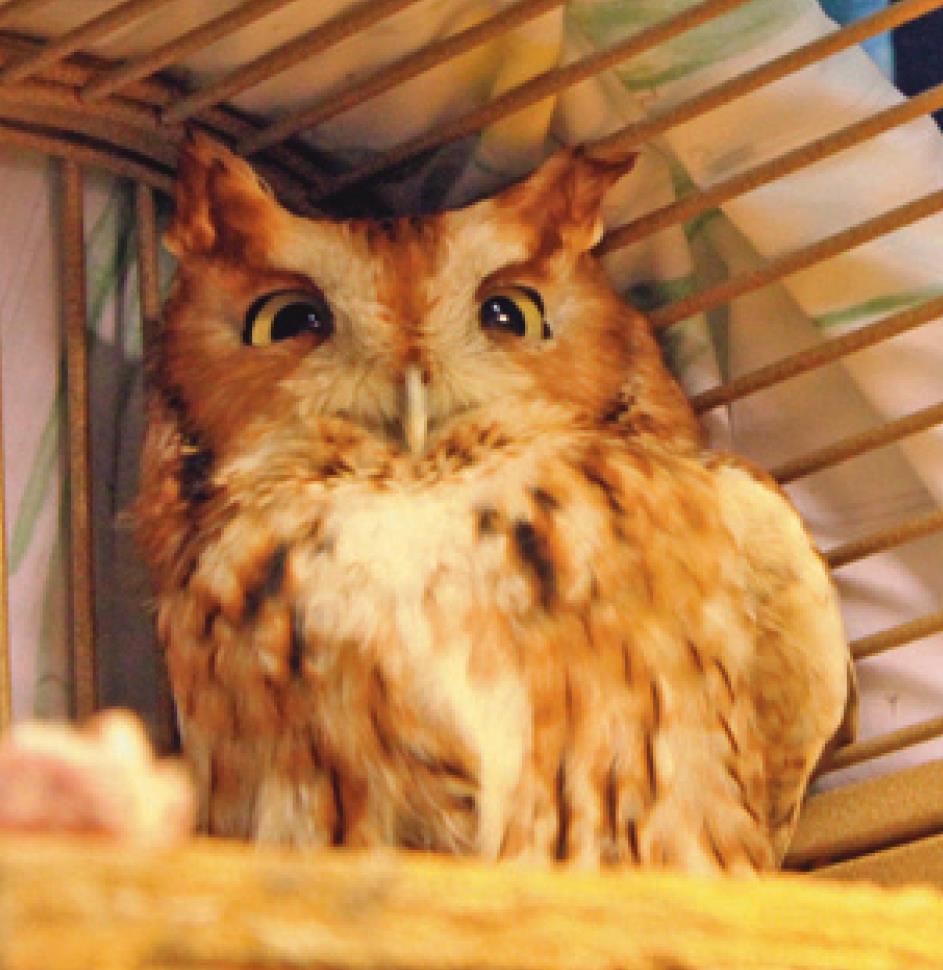
Other animals include Seraphina, a female screech owl; Jefferson, an American Kestrel, the smallest of all raptors, and Adobe, a desert tortoise who has been with the nursery since 1993.
With a limited staff, tending to the animals’ daily needs can be a challenge, particularly during the pandemic. Ms. Schroeder noted that Nature’s Nursery lost volunteers, many of them older and retired. She understands that, given COVID-19 and the close proximity in which everyone works in the buildings. But she said staff endeavor
But she said staff endeavor to separate volunteers so that no more than one is in a room at any given time. Volunteer hours also are spread out to avoid overlapping.
She encourages anyone interested in volunteering to contact the nursery. “Volunteers work directly with the animals and we will train you,” she said, adding, “It takes 12 hours.”
Volunteers typically work one four-hour shift per week and interested individuals also are needed to transport injured animals. “Sometimes you pick up a contained animal and other times, it is literally a wild goose chase.”
Training on how to catch an animal and the equipment needed is provided to volunteers. She also is working on obtaining a grant again this year to vaccinate volunteers. Last year, grant funds were used to administer rabies vaccines to seven volunteers. “We can’t send someone out without them being vaccinated.”
While the nursery is currently in cramped quarters, plans are under way to move to another facility on Dutch Road in Waterville. For now, the organization continues to raise funds for the renovation and move, and they hope to be able to relocate in a year or so.
Ms. Schroeder said the nursery is very appreciative to Metroparks Toledo for “allowing us to use the farmhouse all these years.”
And she noted the nursery is always in need of supply or monetary donations to continue operations.
“Frozen dead rodents [to feed animals] get expensive,” she said, adding they cost $3,000 per year. A business used to donate them, but is no longer in operation.
~Jane Maiolo