

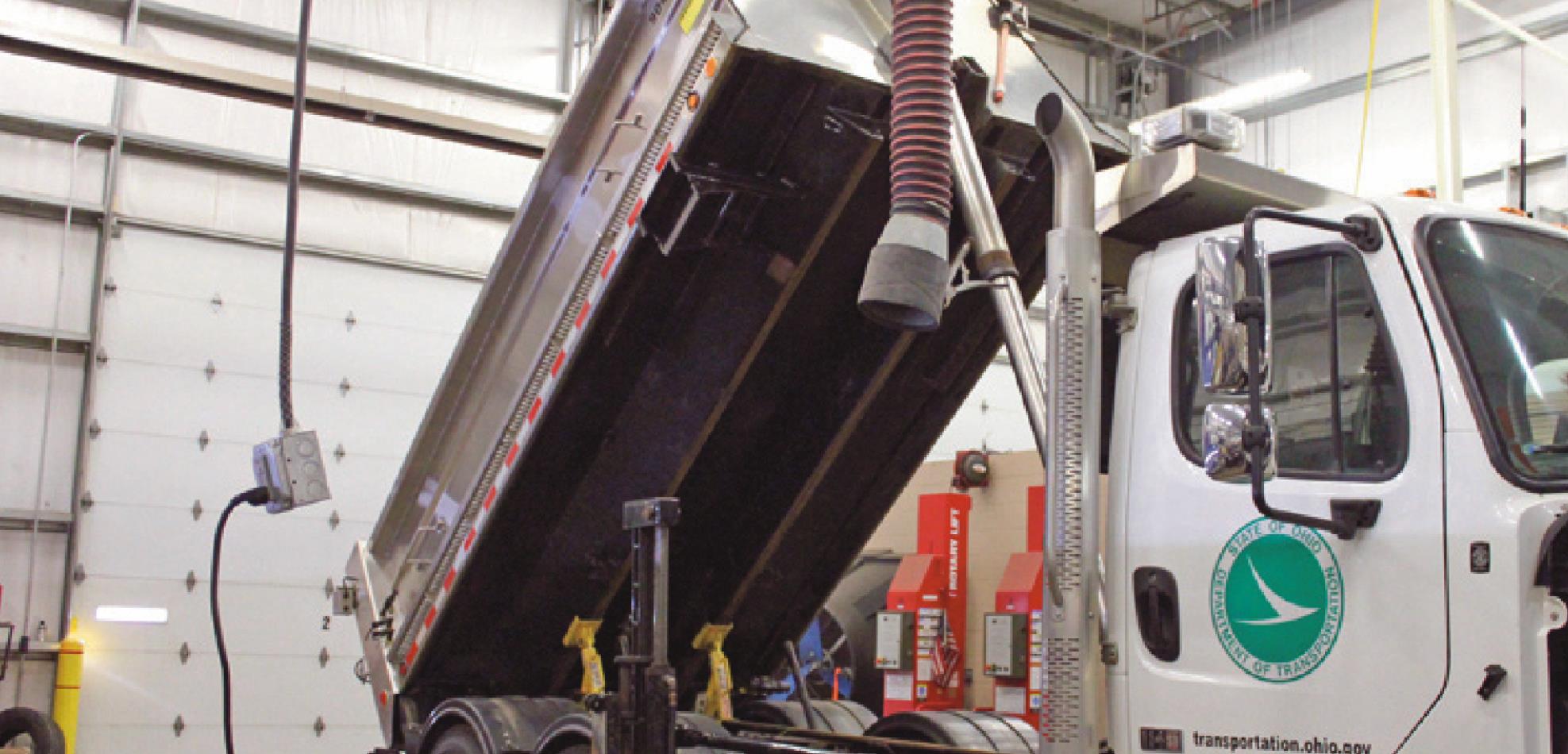
In northwest Ohio, sometimes the weather cooperates and sometimes it doesn’t. This year unlike 2020, proved perfect for the Ohio Department of Transportation, which on November 10 conducted its annual equipment inspection to ensure readiness for the winter weather ahead.
And they didn’t have to wait long. A cool and breezy day greeted crews as they prepared equipment, only to be followed four days later by the first measurable snowfall of the 2021-22 winter season.
But just like spring in northwest Ohio, the fickleness of Mother Nature, quickly performed a turnaround with temperatures reaching nearly 60 degrees the following week.
Those fluctuations failed to deter Dan Grant, transportation administrator, and his staff of 20 full-time and three seasonal employees from performing their duties.
Mr. Grant said the Maumee garage like all ODOT facilities in northwest Ohio is ready for the winter, and he believes they are well staffed for the snowy, cold season. “I don’t think the labor shortage will impact us,” he said.
Rebecca Dangelo, public information officer, agreed, “We had a job fair and overall had good responses.”
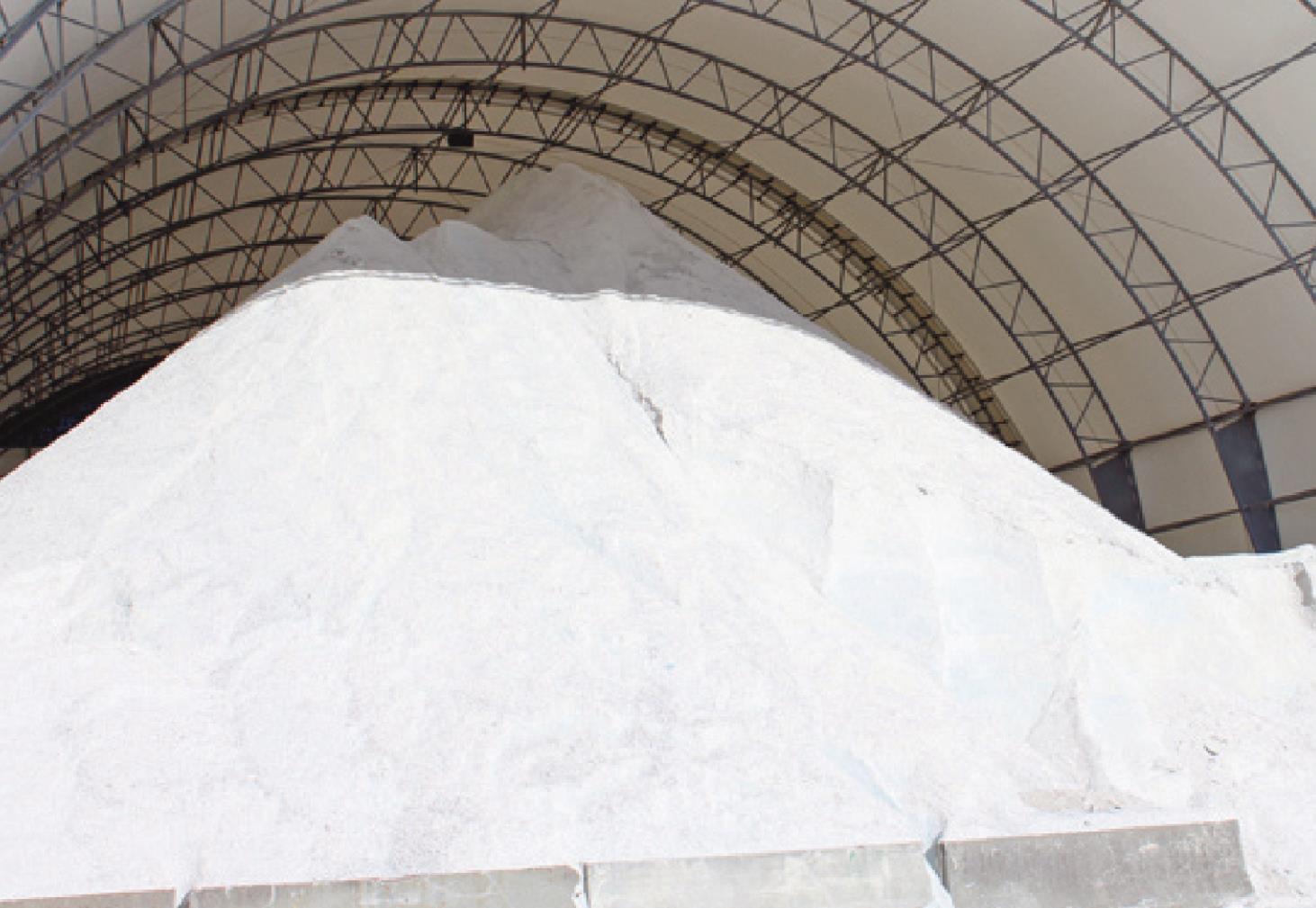
Among their preparations for winter is the acquisition of rock salt. Toward that end, the Maumee facility’s storage shed is stocked with 6,300 tons and there are 5,900 tons at Northwood, Mr. Grant pointed out, adding as supply diminishes, it will be refilled as needed.
Rock salt is just one tool in ODOT’s winter weather arsenal. They also make use of brine–a mixture of salt and water.
The deicer–seen as white streaks on major arteries–is the first line of defense on roadways prior to an approaching storm. The application is not limited to state roads and highways. Often supplied by ODOT, the brine is used by neighboring communities for application on local roads.
Just as ODOT officials prepare for winter, Mr. Grant advises motorists to do the same, making sure their vehicles are in top operational order and contain sufficient fuel when bad weather strikes.
He reminds drivers to exercise care when snowplow operators are on the road, decreasing their speed and giving the operators plenty of room. “Last winter, ODOT plow trucks were struck 46 times while engaged in snow and ice operations,” he said. “The previous winter, crews were struck eight times.”
He also cautions motorists to be wary of weather conditions, which can change drastically in minutes, turning roads to sheets of ice. When encountering other vehicles pulled off the road, motorists are required by Ohio law are to move over a lane or slow down, he said.
ODOT trucks are equipped with two plows designed to clear the road, ramps, shoulders and road intersections at interchanges. All trucks are equipped with GPA/AVL units which collect location, material and equipment usage data to aid in storm management, Mr. Grant explained.
To further aid the department, there are 29 road weather information systems located strategically throughout the district. “The data collected is used by plow operators and transportation managers to support decision making in response to winter events,” he explained, adding, “The system provides realtime pavement temperatures.”
Garages in Lucas and Wood counties are stocked for winter and have a fleet of 32 trucks, 13 in Lucas and 19 in Wood.
In the 16-county northwest Ohio region, ODOT maintains responsibility for 6,750 lane miles of interstate, U.S. and state highways. It has 536,000 gallons of liquid deicer on hand and 95,000 tons of rock salt. Last winter, they used 4 million gallons of deicer and 94,000 tons of rock salt.
Statewide this year, there are more than 3,000 ODOT drivers and 265 mechanics to keep the fleet operating with more than 20 million gallons of deicer and 770,000 tons of rock salt in storage.
ODOT reminds motorists to visit the OHGO app when traveling. The app provides updates on traffic situations that is delivered directly to cell phones.
~Jane Maiolo