
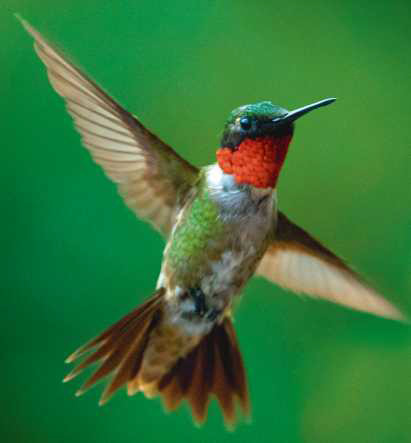
This ruby-throated hummingbird will only be in the area for a little longer before heading south for the winter. Typically, adult males–only the adult males have the ruby throats that give the species its name–depart before the females and the juvenile males hatched this year.
They can be found at feeders and nectaring on flowers, explained Art Weber, nature photographer.
They love tubed flowers and are attracted to reds and, less often, yellows. The flower-lined stalks of late-blooming red cardinal-flowers fit that bill–pun intended–perfectly. Both benefit; hummingbirds get the nectar needed for fuel and–as they do so–unwittingly pollinate the plants. It’s a win-win relationship.
“Do not be fooled into thinking these tiny flying jewels are delicate,” he said. “They are bird-smart and capable of amazing feats, as well as routinely engaging in aerial scuffles with other hummingbirds to defend a food source.”
He added, “Their incredibly fast wingbeats give them amazing quickness and maneuverability, including the ability to fly backwards as well as hover.”
Even more amazing is that some of the hummingbirds will fly non-stop across the Gulf of Mexico to wintering grounds. “It’s well worth taking some time to read up on this amazing species,” Mr. Weber believes.
Even after these birds leave for the winter, gardeners may still wish to keep their feeders full and fresh on the offchance that they will attract a rufous hummingbird.
“The rufous is a western species that occasionally strays eastward on its migration. You just might attract a surprise visitor to your feeder,” he said.