
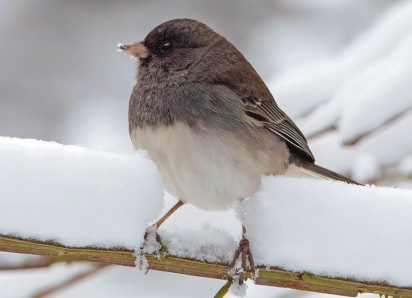
The snowbirds are back. Anyone who is new to birding may not have enough experience to notice there are birds that are common at some times of the year while absent at others.
Among the most obvious are the dark-eyed juncos, nattily feathered members of the sparrow family. Throughout summer, most of them have been in Canada, enjoying the friendly summer climate, feeding on insects and abundant seeds of the season, staking out nesting territories and raising young.
“In summer, you’d never guess that juncos are one of the most common of North American songbirds,” said Art Weber, nature photographer for Metroparks Toledo.
As cold weather approaches, they converge on much of the United States in numbers impossible to ignore, he explained. “Their arrival is so obvious and well-timed with the change of seasons that they’ve earned the nickname, ‘snowbird’,” he added.
And with fall soon giving way to winter, the snowbirds are back. A smattering arrived in late September and now they are here in conspicuously good numbers.
“It’s a sure sign that we’re about to plunge into the time of short days, cold nights, and–brace yourself–the certainty that the first ice and snow is sure to arrive in coming weeks,” Mr. Weber said.
These active, ground-feeding birds entertain birdwatchers, hopping around on the ground, scratching through leaves and snow to feed, and showing off extraordinary maneuverability as they fly through dense vegetation.
“You will know them by their sparrow size, typically slate gray backs and wings, white outer tail feathers that flash in flight and a well-defined whitish underside,” he noted. Above is a dark-eyed junco captured by Mr. Weber.