
Those who attend or are fans of the University of Toledo know about “the streak.” In the annals of UT history, the streak occurred between 1969 and 1971 when the Rocket football team chalked up 35 consecutive undefeated games led by quarterback Chuck Ealey.
Ealey’s name and legacy are such a part of the program’s lore that most believe he is from the community and still resides on one of the treelined streets surrounding the university.
Over the past 50 years, much has been written about the streak–something that no other team has achieved in modern college football history.
Even more has been written about Ealey, a Portsmouth, Ohio native who graduated with a degree in business economics before moving to Canada to become one of the country’s most celebrated football players.
Ealey is not the typical sports celebrity. Although his talent gained him notoriety early, it was his character and intelligence that made him the type of role model parents want for their children.
He was raised by a single mother who never completed high school. He knew poverty–but he also knew love and possessed a deep faith–both sustained him through very difficult days.
After all, he was a young black man in a rural, southern Ohio community who decided early that education was the best–perhaps only–way he might change the trajectory of his life.
What is different about Ealey? He is quick-to-deflect fame and the attention that accompanies it. He prefers to talk about coaches like Bo Schembechler for whom he wanted to play when the legend coached at Miami University and Frank Lautebur, for whom he set records at what he still remembers as Toledo University.
Getting Ealey to open up about himself is not easy. He wants people to know about his teammates–those with whom he defied the odds to win 35 games in a row.
Together, they amassed three MAC championships, three consecutive Citrus Bowl wins and more memories than can fill this space. He wants to talk about teammates who became lifelong friends–those with whom distance and years can’t diminish the memories of the practices, particular key plays in games, even the missteps.
And with sadness, he reflects on teammates no longer here to enjoy the accolades bestowed upon them at the Rockets’ October 19 Homecoming game in Glass Bowl Stadium. They faced a cheering crowd and, just for a moment, relived those glory days.
Even today’s coaching staff still use “the streak” to motivate current and future team members. They know the probability of any football team winning 35 or more games in a row is unlikely– but, let’s talk about motivation.
Ealey’s motivation was to obtain a college degree and football provided that opportunity. Unlike many athletes, he earned his degree in four years.
Opportunities for his life post-TU were many. He had a job offer with a respected local company. And of course–the idea of quarterbacking an NFL team was high on his list. Except, the NFL was not ready for Chuck Ealey–at least not at quarterback. It wasn’t his size, or any of the other frivolous excuses batted about.
In truth, no team had drafted an African-American as quarterback. However, the same did not hold true for the Canadian Football League.
“I came to Canada to live the American Dream,” he recalled. In his first year as a pro, he quarterbacked the Hamilton Tiger-Cats to the Grey Cup, which is Canada’s equivalent to the Super Bowl.
He was named CFL Rookie of the Year, and he never looked back. He and his wife Sherrie remain in Canada, where they raised their children Skye, Damon and Jael, and he enjoyed much professional success after retiring from the CFL.
Every year, when nominations are released for the College Football Hall of Fame, there is a moment when Chuck Ealey fans breathe deeply and wonder, “Will this be the year?”
For almost 50 years, induction has been one accolade eluding is fans, but not the athlete.
With a twinkle in his eye, he said, “I think not getting in has brought me more attention. I often wonder if anyone would think of me if I had been inducted early on.”
For years, many have speculated on the reasons and questioned the Hall of Fame’s failure to honor Ealey’s accomplishments.
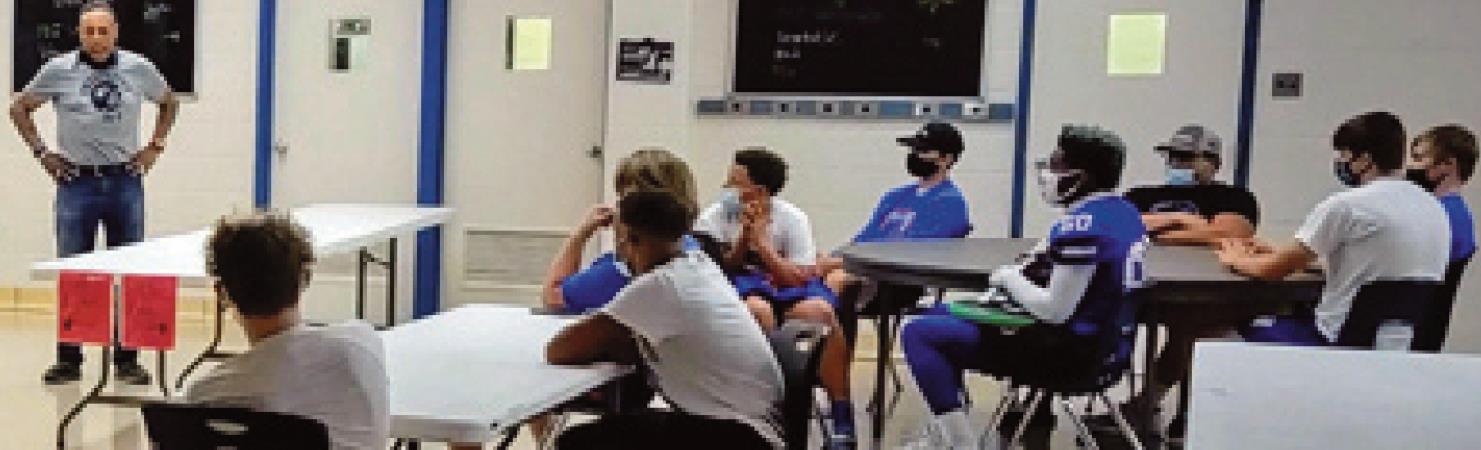
Ealey prefers to talk about the work that his Undefeated Spirit Foundation is doing to support and celebrate young people. Most recently, he focused on a recognition program for high school seniors who possess characteristics that he defines as an undefeated spirit.
“We look for athletes and students who contribute in their classrooms, schools, and communities,” he explained.
The Undefeated Spirit awards program focuses on two categories –one for athletes and another for writers. Early partnerships with Buckeye Broadband and Leadership Toledo helped establish the program, which selects athletes–football players and female athletes regardless of the sport, plus it invites 12th grade students from more than 30 local high schools to write essays that describe their undefeated spirits.
Undefeated Spirit Foundation board members Tom Cole and Kristina White work hard to identify the most deserving recipients each year.
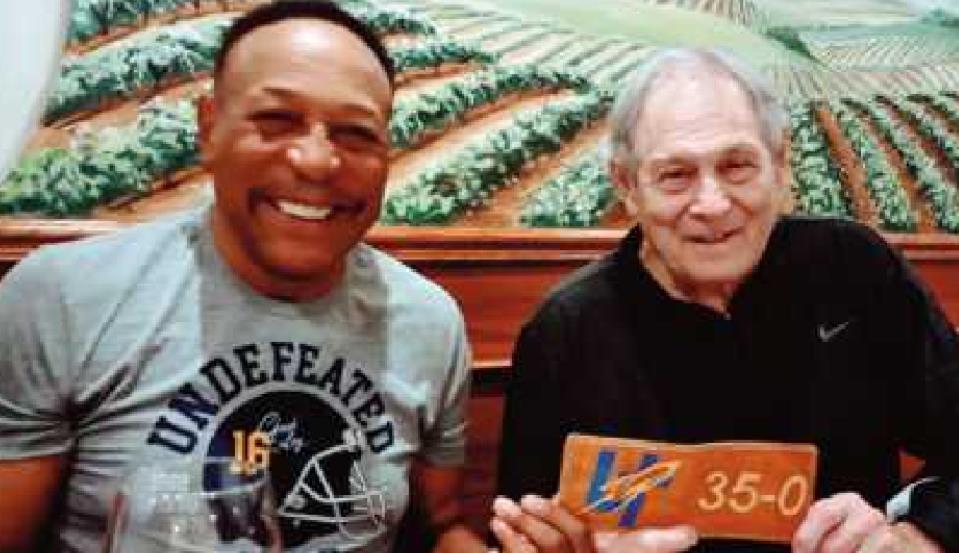
In honor of the 50th anniversary of the 35-0 teams, the Undefeated Spirit Foundation partnered with Jupmode to offer a commemorative T-shirt.
“We appreciate John Amato and the folks at Jupmode for donating a percentage of the shirt sales to our awards programs,” Mr. Ealey said.
For information on shirts, visit jupmode.com/collections/50th-anniversary-undefeated-chuck-ealey-shirt.
For more about the Undefeated Spirit Foundation, visit undefeatedspirit.com.