
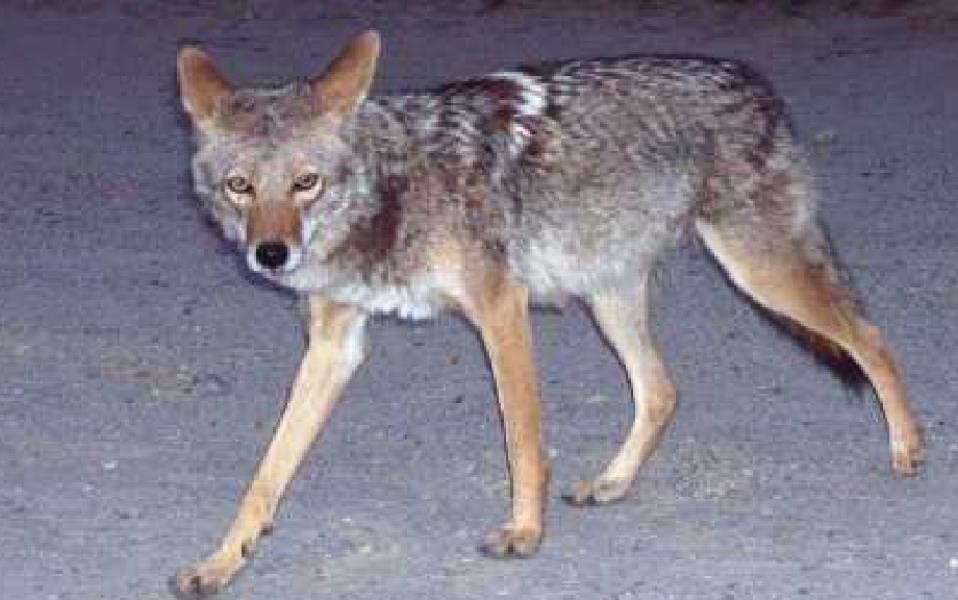
The growth in residential and commercial development impacts not only school systems; it also infringes upon wildlife, including coyotes which are seen more frequently in some neighborhoods.
The slender animal, similar to a medium-sized dog, is usually gray in color with a bushy tail tipped with black. It is commonly seen at dawn and dusk, but can found through out the day.
Considered a nuisance species by the Ohio Department of Natural Resources, they can be hunted year round with no daily limit. In areas where hunting is not possible, residents can use a nuisance trapper to assist with problem coyotes.
According to the ODNR, coyotes are common throughout all 88 counties and can be found in rural or suburban settings.
Scott Butterworth, district manager for the division of wildlife, noted coyotes are adaptable and can live and thrive with humans or in wilderness areas.
“Occasionally they may kill livestock and pets, but for the most part people are not even aware how close they live to coyotes,” he said.
Tim Schetter, director of natural resources for Metroparks Toledo, agreed. “Humans are considered a predator to coyotes so they stay away from us.”
He pointed out they naturally hunt mice, voles, rabbits, chipmunks and other small wild mammals. “They also consume nuts, fruits and roadkill. Dogs and cats are typically not a natural part of the coyotes diet, but if left unattended in areas where coyotes are active they could possibly become prey.”
Mr. Butterworth concurred. “Dog owners should understand coyotes are territorial and can view other canines as a threat to their territory, especially during the breeding season and when young are present.”
He recommends dog owners not let their pets roam off leash and fence their yard. “Being aware if coyotes are around minimizes conflict with coyotes.”
When asked if coyotes would ever attempt to bait a dog, perhaps using a female in heat, Mr. Schetter replied, “That is most likely an urban myth. While they are considered intelligent animals, they do not have the conceptual ability to develop plans that include luring dogs into a trap.”
However, he admitted, the animal is an opportunistic predator that could potentially pursue small dogs as prey if the dog is roaming off leash in a coyote’s territory, especially from dusk to dawn.
While there is no population estimate locally or statewide, the animal is common in Ohio and other states, Mr. Butterworth noted.
Mr. Schetter said their population at Metroparks has not been “problematic, and we have no plans to initiate a culling program for coyotes.”
He added that coyotes do not pose a threat to park visitors or dog walkers since the animal is most active during nighttime hours when parks are closed.
Given the increased popularity of raising chickens in residential neighborhoods, Mr. Butterworth recommended protecting them by exercising good animal husbandry. “It is the best method to prevent coyotes from eating chickens and livestock.”
Addressing the life span of coyotes, Mr. Butterworth said it varies depending on the environment–urban or rural. “Most in the wild live less than 10 years if they make it to maturity, but can live up to 20 years in captivity,” Mr. Butterworth explained. “Females breed at age 1 and will continue breeding throughout their lives. A typical litter is around six.”
Coyotes have no natural predators in Ohio, but he believes even if there were, it would not impact the population with the exception of young coyotes which would be the most vulnerable. But like other animals, they are subject to disease such as distemper, he added.
As for their territorial range, Mr. Schetter said coyotes typically roam in a two- to five-square-mile area. “But they are capable of moving large distances so it is possible a coyote could move between Oak Openings Preserve and Secor parks.”
What should someone do if a coyote is encountered while walking a pet? For instance, Mr. Butterworth was asked about an incident that occurred in which a resident walking his dog in early evening realized the two were being tailed by a coyote.
The ODNR district manager suggested yelling or waving your arms to get the animal to leave.
“The coyote may have just been curious. Similar to their dog, look at the body language of the coyote to try to get an idea of how it is acting,” he said. “Depending on when this incident happened, it also may have been a young coyote out on its own for the first time and trying to figure out what the person and dog was.”
When asked if the growth in residential and industrial development could squeeze displaced coyotes, Mr. Schetter doubts that would happen. “This species is amazingly adaptive, and they can thrive in dense urban settings like Chicago. They will adjust their territories accordingly and move on to other locations if need be.”
He added, “According to Professor Stan Gehrt, a coyote expert at Ohio State University, coyote home ranges tend to increase with fragmentation and development.”
Mr. Butterworth reassured residents that “in the vast majority of circumstances, coyotes are not a threat to people or their pets. Like any wild animal, they are trying to make a living in a human dominated world.”
He added, “People need to respect them as a wild animal and enjoy watching them from a distance.”
For more information on coyotes, visit ohiodnr.gov/discover-and-learn/animals/mammals/coyote.
~Jane Maiolo