
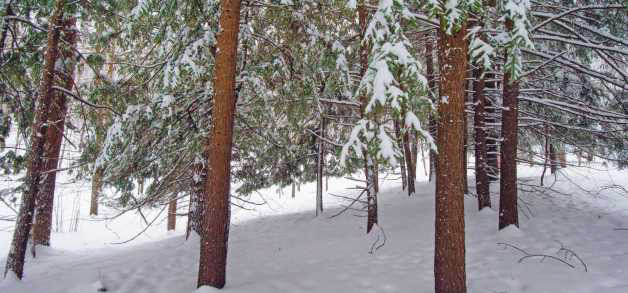
The tradition of bundling up the family and heading into the woods in search of the perfect Christmas tree would not have been possible 200 years ago, unless you were willing to settle for one of the few scraggly native Eastern red cedars that persisted here and there.
“Yep, it’s hard to believe, especially when you’re walking through the mature pine plantings in Oak Openings Preserve,” said Art Weber, nature photographer, who took this photo.
“The conifers in Oak Openings were planted and are not native,” explained Karen Menard, supervisor of monitoring and research for Metroparks Toledo.
But it’s likely conifers once had a much larger presence. “It’s a pretty good bet that they were here several thousand years ago immediately after the glaciers receded, but within the context of the landscape immediately prior to European settlement of the region. I’m not aware of any evidence that suggests they were here,” said Tim Schetter, chief natural resources officer.
“Based on Lou Campbell’s book on the Erie Marshes, I believe that Eastern red cedar would have occurred on the barrier beaches and sandy deposits along the coast, but of course, those are all gone now,” he added.
Interestingly, pines and other conifers thrive where they have been planted in many locations, especially in the sandy soils of Oak Openings. Most are growing in large plantations to be found among the first parcels acquired for the preserve in the 1930s, ’40s and ’50s. Those plantations are all more than 50 years old. Some of the plantings–red pines for example–have exceeded their life expectancy and are collapsing. Others have required management for the benefit of the special ecology of Oak Openings.
“While not naturally occurring in our corner of the state, there are six genera of evergreens native to other parts of Ohio: yew, Northern white cedar, Eastern red cedar, larch (tamarack), hemlock and pine,” Ms. Menard said.