
Keeping the internal fires burning is a big deal for local wildlife when the air temperature drops past cold to downright frigid. For birds, especially, their high metabolism means consuming an extraordinary amount of high energy foods. When natural foods are encased in ice and snow–as they are now–survival becomes exponentially more difficult. So it is no surprise that those with bird feeders and more elaborate backyard feeding stations are getting big numbers of birds, as well as squirrels and other wildlife. Feeders, whether simple or expansive, can be rewarding this time of year. “It’s a great trade off actually,” said Art Weber, nature photographer. “Wildlife gets an extra boost for survival, and we’re treated to a close look at our wild winter residents coming and going.”
It’s a lesson in just how beautiful birds are, and what a wonderful variety residents enjoy. For anyone who is leaning toward a greater interest in birding, now is the time to get started. The birds are close up, reliable and the number of species is much more manageable than when spring migration is underway.
“Right now there are some birds we only see in winter, like Juncos,” Mr. Weber said, adding that there can be some surprise visitors from up north that the region doesn’t see every winter.
The key to enjoying the birds and providing meaningful foods is to offer foods high in protein. Starting with a tube or hopper feeder with black oil-type sunflower seed. That will appeal to the widest variety of seed eaters. Adding other protein sources like suet, peanuts and dried mealworms will expand the number of species that visit your birdfeeder, he said.
Know, too, that different types of feeders can attract different birds. To see feeding stations in action, visit any of the Windows on Wildlife in six Metroparks–Wildwood Preserve, Pearson, Swan Creek Preserve, Side Cut, Oak Openings Preserve and Secor–or at W.W. Knight Nature Preserve and Sawyer Quarry Preserve in Perrysburg Township.
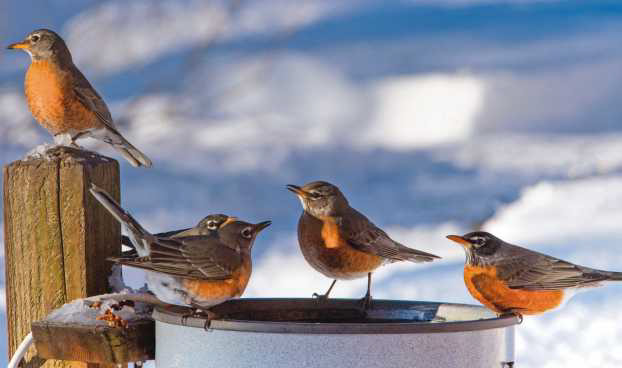
Often overlooked is open water. Mr. Weber recommends placing a heated water bath near the feeding station as a bonus for wildlife. “You might just attract a surprise like this small flock of Robins visiting a heated bath near Oak Openings Preserve Metropark,” he noted. “It turns out not every Robin heads south for the winter. A few stick around, feeding mostly on dried fruits and berries.”