
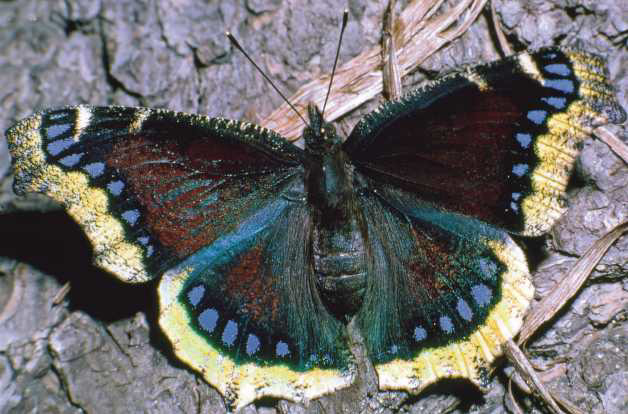
As the region experiences more and more unseasonably warm days don’t be too surprised if, while walking at a local park nature trail, you spot an adult butterfly flitting about, said Art Weber, Metroparks Toledo nature photographer.
Look a couple more times just to be sure, but it’s probably true. “There’s a good chance you just saw an adult mourning cloak butterfly,” he added.
The mourning cloak emerges as an adult in fall. When freezing temperatures arrive it seeks safe shelter in natural cracks and hollows where it can stay out of the weather and enter a state of torpor, basically shutting down. It survives the winter in this torpor, emerging in early spring to look for food and water, Mr. Weber explained.
Pickings are slim for nectaring flowers so mourning cloaks survive by feeding on running sap or, perhaps, rotting fruit.
Their remarkable adaptation to survive winter temperatures comes with an even more remarkable life expectancy that is measured in months rather than the mere one or two weeks that most butterflies live as adults.
“Now is a great time to stay alert for this first butterfly of the year,” he said.