I think we can all agree that drivers, as a group, are not perfect. Crashes happen. Distracted driving is real. You’re probably thinking of texting and driving, but the truth is, crashes happened long before cell phones.
Maybe your child is screaming in the back seat. Maybe you just got bad news about your job or a loved one before getting in the car. Maybe a hornet got in the car with you.
We get stressed and don’t always pay as much attention as we should. And even when we do behave perfectly, there is the very rare case when someone has a health emergency and loses consciousness. Unexpected things happen that sometimes lead to crashes.
However, not all crashes are equal. Some result in death or serious injury–and some do not. For those involved, that’s a big difference.
When I became an engineer, I pledged to hold paramount the health, safety and welfare of the public. It breaks my heart when someone dies or is critically injured on a road we are responsible for. I used to comfort myself with the idea that people make mistakes and so traffic deaths are inevitable.
But there are some interesting things happening in this profession that make me believe it is possible to design roads that protect against human error–to create a transportation system that centers human life and safety above all else.
This is why my late predecessor, Keith Earley, and I made the decision to build roundabouts in the community. Roundabouts save lives.
Within the same week in June, there were four crashes in Lucas County. Two got lots of attention. Two were almost ignored. The two that received attention happened in roundabouts and were caused by driver medical issues. They involved other vehicles. In both roundabout incidents, the crashes resulted in property damage, but everyone walked away. If these had occurred at a signalized intersection, there would have been a high likelihood of serious injury or death.
The two that received no attention happened on Secor Road between I-475 and Central Avenue. One in-volved a car rolling over and the other, significant damage to the vehicle.
In each of these crashes, I witnessed individuals being placed into an ambulance and taken to the hospital. These four crashes prove the point: When crashes happen in a roundabout, we get property damage and not ambulance runs and body bags.
The latter two crashes are tragic and should push people to demand improvements to prevent such tragedies in the future. But the real tragedy is that we have become desensitized to preventable, serious injury-causing crashes which occur on our roads every day. Roundabouts save lives.
I understand roundabouts are still relatively new to drivers and things that are new can feel confusing or frustrating. Here are a few things you might not know about roundabouts.
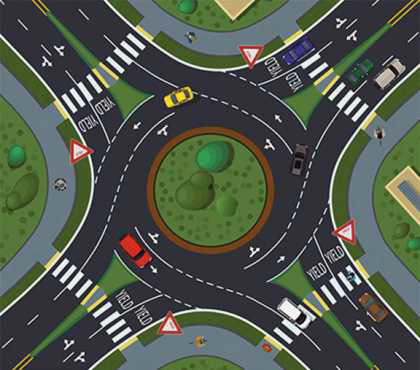
•Roundabouts reduce the likelihood of a crash. On a typical two-road intersection, there are 32 conflict points where a crash might happen. That same intersection with a roundabout has only eight conflict points.
This lowers the chances of a crash ever happening. The shape of roundabouts eliminates head-on and “T-bone” crashes, which are the kinds of crashes that are more likely to kill people.
•Roundabouts are slower (and that’s a good thing). A well-designed roundabout requires a driver to travel at a speed of 25 mph or less through the intersection.
The likelihood of someone dying or suffering a life-altering injury is dramatically reduced in a crash with a vehicle traveling at this speed, than one traveling even five mph higher. Lower speeds also provide a driver more time to react to something unexpected and avoid a crash altogether.
•Roundabouts save time. I know I just told you a welldesigned roundabout means people must drive slower, so how do roundabouts save time? They move traffic more efficiently, reducing congestion during busy times and eliminating time wasted at red lights and stop signs.
•Roundabouts are a smart use of taxpayer dollars. In the long term, roundabouts cost less to build and maintain than intersections with traffic signals. They also reduce long term societal costs from loss of life.
Still not sold on roundabouts? Sorry, but they are not going away, either here in Lucas County or across the country. This intersection improvement is increasingly being adopted for the reasons I have mentioned.
We are proud of our roundabouts in Lucas County and the differences they have made in keeping citizens safe. We are building roundabouts because we care about each of you and all the people who love you. Every Lucas County citizen is valuable to this community, and I don’t want you or those you love to die on the way home.
Roundabouts save lives.