
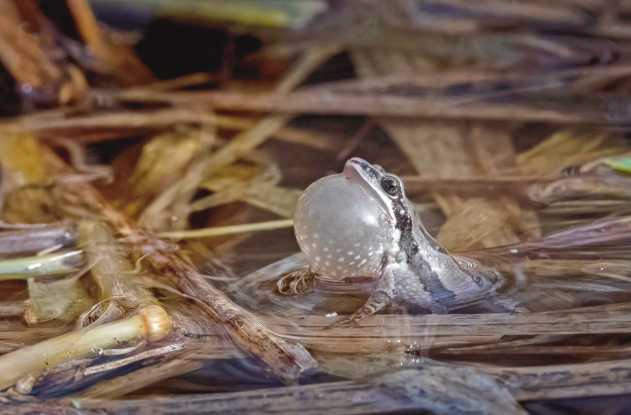
Love songs are in the air. There are places, especially in the wet areas of the Oak Openings Region, where the singing is so loud one can hardly hear oneself think.
All that singing is a good sign. It means we have had enough rainfall–so far at least– to reestablish the vernal pools spring frogs need to find a mate and lay eggs, explained Art Weber, Metroparks nature photographer. The pools need to hold water long enough for their tadpoles to mature. Take a walk on a Metroparks Toledo trail or, if there’s a natural pool within earshot, sleep with the window open on a mild night this spring and enjoy the serenade. “Those are the male frogs you will be listening to–lots of them–trying to attract a mate.”
“We’ve learned that singing takes so much energy that a male frog doesn’t sing every night,” said professional herpetologist Greg Lipps.
The wetland serenade visitors enjoy hearing these days is courtesy of the tiny chorus frog and its equally diminutive and vocal cousin, northern spring peepers. Chorus frogs rarely exceed an inch and a half in length and their close cousin is even smaller. Both of these tiny animals can appear in a wide variety of muted colors ranging from grays to browns, even dull green. Get either species in hand, and it’s easy to understand why they’re so hard to see, but hard to understand how they can be so vocal.
The song of the chorus frogs has been best described as the sound of a finger running across a comb. For spring peepers, it’s their repetitive peep that gives them their name. Joining them are the wood frogs making a sound like the quack of a duck. They are the troubadours of early spring.